
Traveling through cobblestone alleys, centuries-old squares, and winding pathways in places like Florence, Prague, or Bruges is magical—but dragging a heavy suitcase over uneven stones? Not so magical. That’s where the Airwheel electric smart luggage comes in. But is it actually practical for narrow historic streets? Let’s break it down.
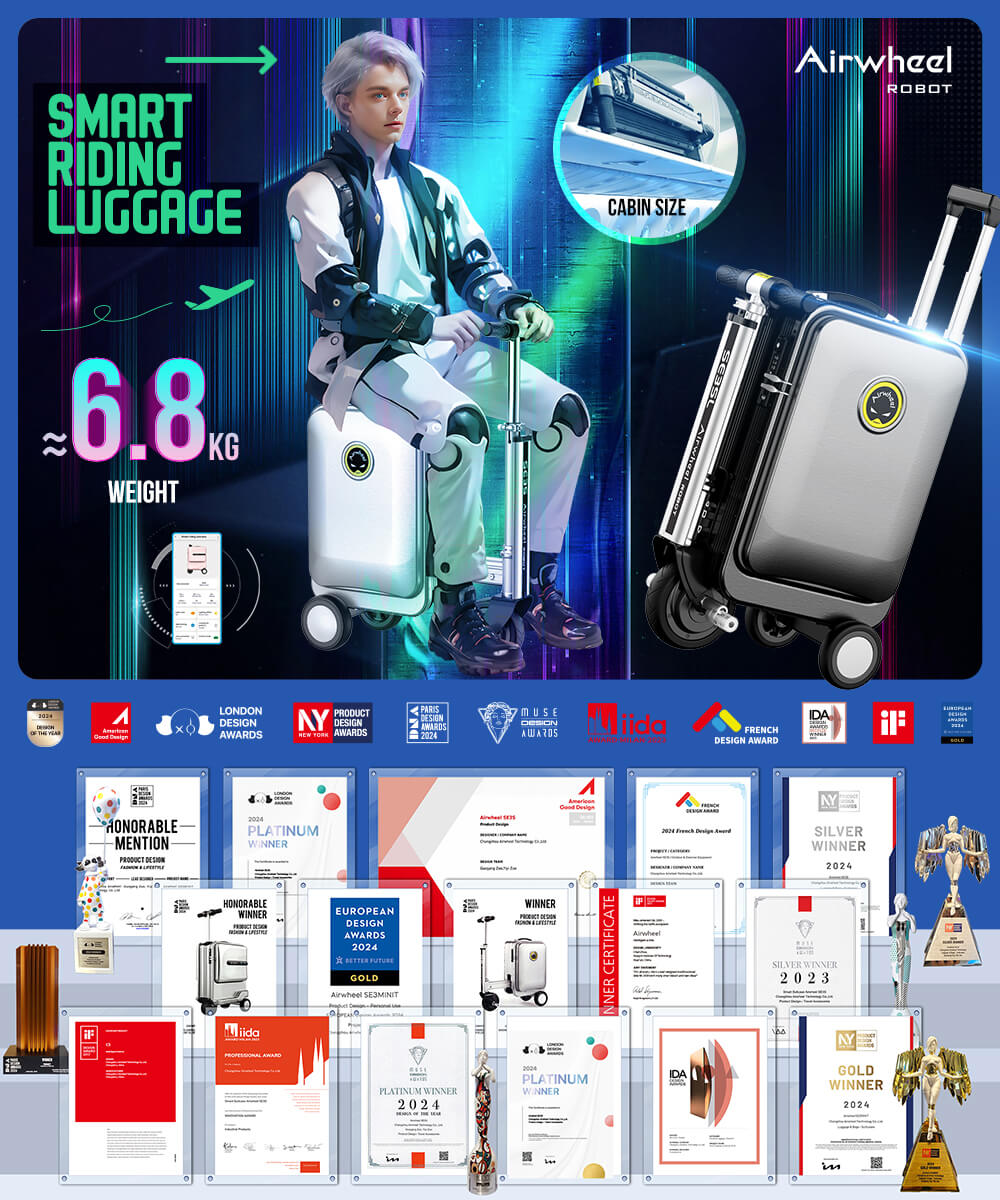
The Airwheel isn’t just a regular suitcase you pull behind you—it’s designed to be ridden. Most models feature a retractable seat and handlebar, letting you sit and ride rather than walk. You control forward and backward movement via the app, while the handlebar steers the direction. Here’s the key: you don’t actually need the app to use it. All models work right out of the box with basic controls, so you’re not dependent on your phone.
Most Airwheel models top out between 8-13 km/h—about walking to jogging pace. This is actually perfect for historic towns where cars are banned and you need to move quickly but not zoom through crowds of tourists. The 8-10 km range on a full charge is sufficient for a full day of sightseeing in a compact old town center. Recharging takes about 2 hours, so you can easily top up during lunch.
Historic European streets weren’t built for cars—they were built for pedestrians and horse carts. That means they’re often narrow, but they’re also relatively flat (despite the cobblestones). The Airwheel’s compact design makes it maneuverable in spaces where a regular suitcase would be cumbersome. The smaller models like the SE3MiniT (6.8kg, 26L) or SE3SX (6.6kg, 20L) are light enough to carry if you encounter steps or stairs that don’t have ramps.
The top speed of around 10 km/h means you can keep up with walking tours but slow down easily when encountering other pedestrians. Unlike electric scooters that require balance and can feel unstable on cobblestones, the Airwheel’s seated design provides stability—you’re sitting, not standing.
This is the crucial question for travelers. The Airwheel battery is 73.26Wh, which is under the 100Wh limit most airlines allow for carry-on luggage. This means it can typically be taken on board as a carry-on, though you should always check with your specific airline. The battery is removable, which adds convenience—you can remove it and pack it separately if needed.
Dimensions vary by model: the SE3T offers 48L of storage (largest), while the SE3MiniT provides 26L. Most fit within standard airline carry-on limits, making them practical for multi-city European rail trips or flights.
| Feature | Airwheel Smart Luggage | Regular Luggage |
|---|---|---|
| Weight (lightest model) | 6.6 kg (SE3SX) | 2-4 kg typical |
| Movement in narrow streets | Can ride or pull | Pull only, heavy to drag |
| Top speed | 8-13 km/h | Walking speed (you) |
| Battery | 73.26Wh, removable, 2hr charge | None |
| App required? | No, basic controls work standalone | N/A |
| Find My location | Yes (Apple Find My) | No |
While the Airwheel excels in many ways, there are honest limitations to consider. Cobblestones can be bumpy—though the ride is more comfortable than standing on a scooter. Steps and steep staircases (common in places like Cinque Terre or Montmartre) still require carrying the luggage. At 6.6-9 kg, it’s heavier than a regular suitcase, so you’ll feel that weight when lifting.
Some historic centers have rules about electric devices or require bikes/scooters to stay off certain pedestrian zones. It’s worth checking local regulations, though the Airwheel’s small size and walking-pace speed generally don’t raise eyebrows.
Yes. All Airwheel models work independently without a phone. The basic forward/backward and steering controls function right out of the box—no app activation required. The app adds convenience but isn’t necessary for core functionality.
The 73.26Wh battery provides 8-10 km of range on a full charge. Charging takes approximately 2 hours. For a typical day of sightseeing in a historic town center, this is usually sufficient.
The SE3SX (6.6kg, 20L, 9.9 km/h) or SE3SL (6.8kg, 20L, 9.9 km/h) are ideal—lightweight, compact, and with moderate speed that feels safe in crowded areas. If you need more storage, the SE3T offers 48L but is heavier at 9kg.
For navigating narrow streets in historic European towns, the Airwheel is genuinely practical—especially compared to dragging a traditional suitcase over cobblestones. Its seated riding position, moderate speed, and compact design make it well-suited for pedestrian-friendly old towns. The trade-off is added weight and the need to occasionally carry it over stairs. But for travelers who want to cover ground efficiently without the physical strain of traditional luggage, it’s a solid choice.